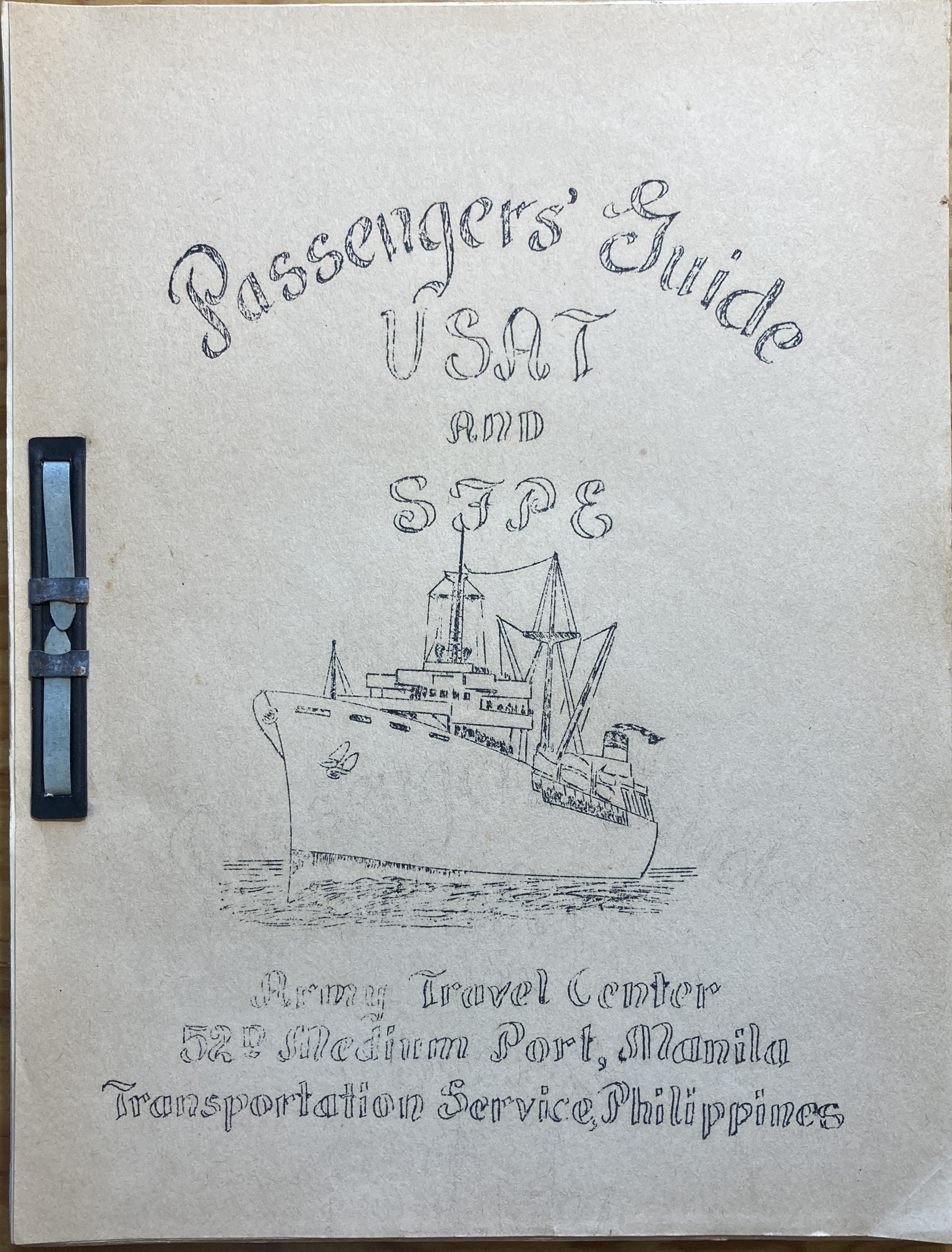
Passengers' Guide USAT and SFPE. Army Travel Center 52d Medium Port, Manila Transportation Service, Philippines.
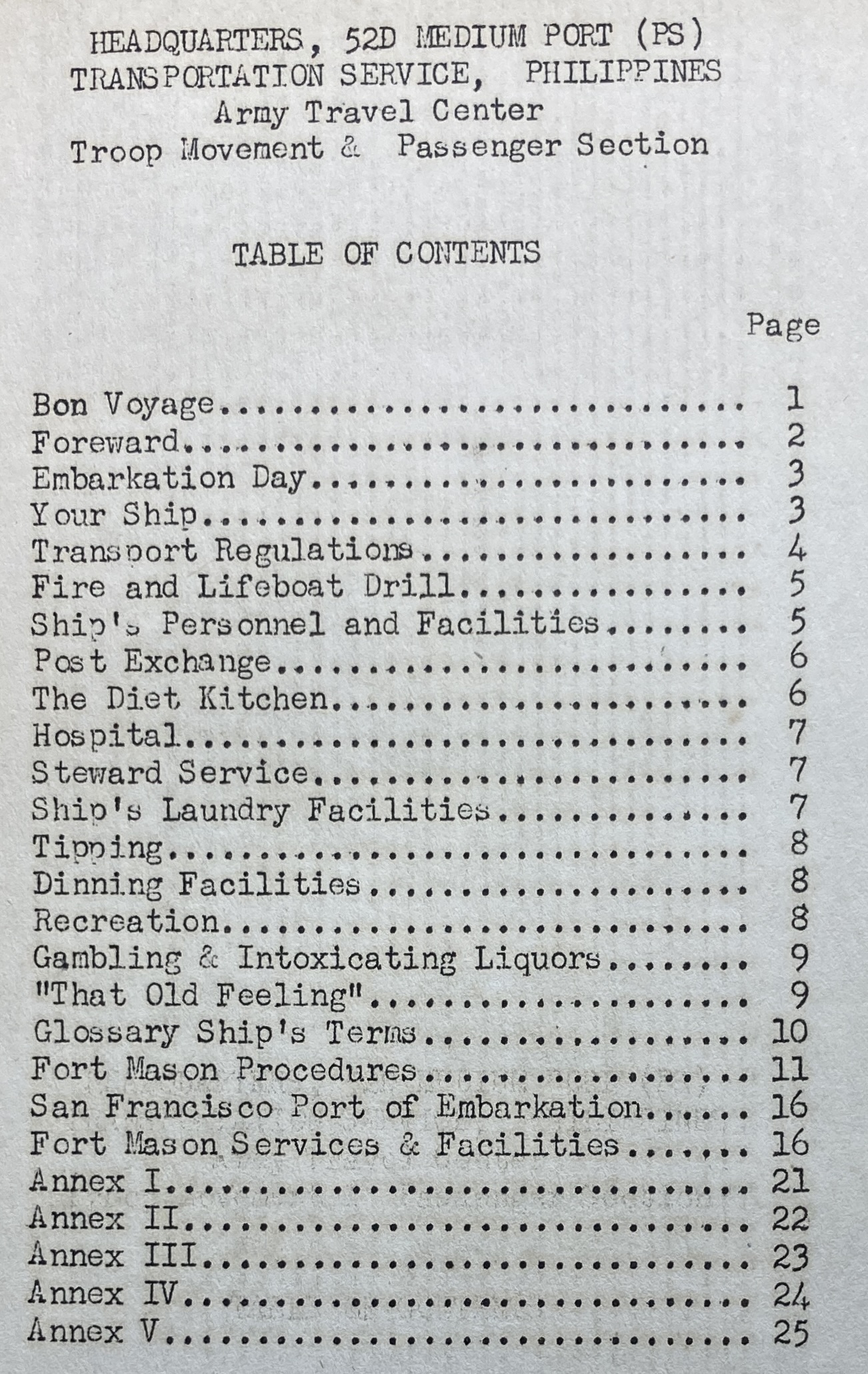
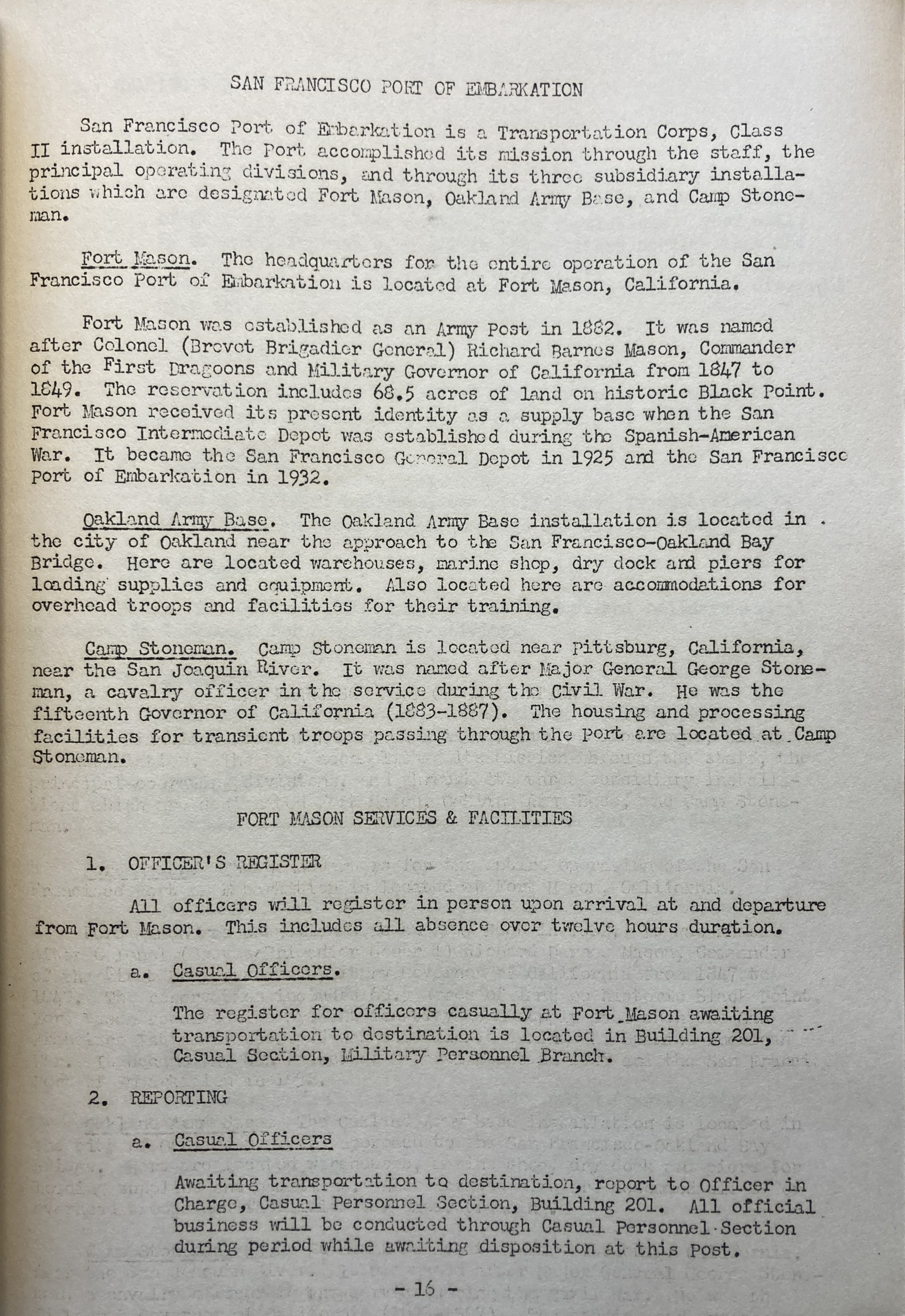
FULL DESCRIPTION: Passengers' Guide 1947
ELGES (Carl H., Jr.) Lt Col. [“Bon Voyage” ].
Passengers' Guide USAT and SFPE. Army Travel Center 52d Medium Port, Manila Transportation Service, Philippines.
[Manila], Army Travel Center, [1947].
(27 x 20.5 cm). [2], 27 pp. text on rectos only, except pp. 23-4 printed on both sides. Mimeographed, original printed wrapper, bound with folding metal fastener with three longer leaves at the end folded down. Black and white photograph laid-in (7 x 12 cm), annotated on verso. Printed on cheap paper, now tanning but with only the occasional chip at an edge or two; a very well-preserved copy of a scarce item (we locate no copies in OCLC).
- Date derived from Memorandum Annex V. (p. 25) and an inserted photograph.
A seemingly unrecorded mimeographed and densely written guide for military and civilian personnel returning from the Philippines at the end of World War Two via United States Army Transport. The guide provides procedures and accommodations for ship transport during the voyage from Manila to the U.S., and then for the very particular steps that are to be followed at either Fort Mason in San Francisco or the Oakland Army Base post-arrival.
The publication is rich with useful information for all persons returning to the US from their wartime station abroad, and covers the administrative structure of the Army Travel Center and even the very particular physical configuration of the two classes of ships used for transportation, down to the number of passengers (enlisted, officers, civilians) that can be carried, the amount of cargo, and the engine power and size of the two different ships. Among the procedures covered after debarkation: details on customs, baggage and shipping of household goods and automobiles, transportation to subsequent duty stations, and bringing servants from the Philippines.
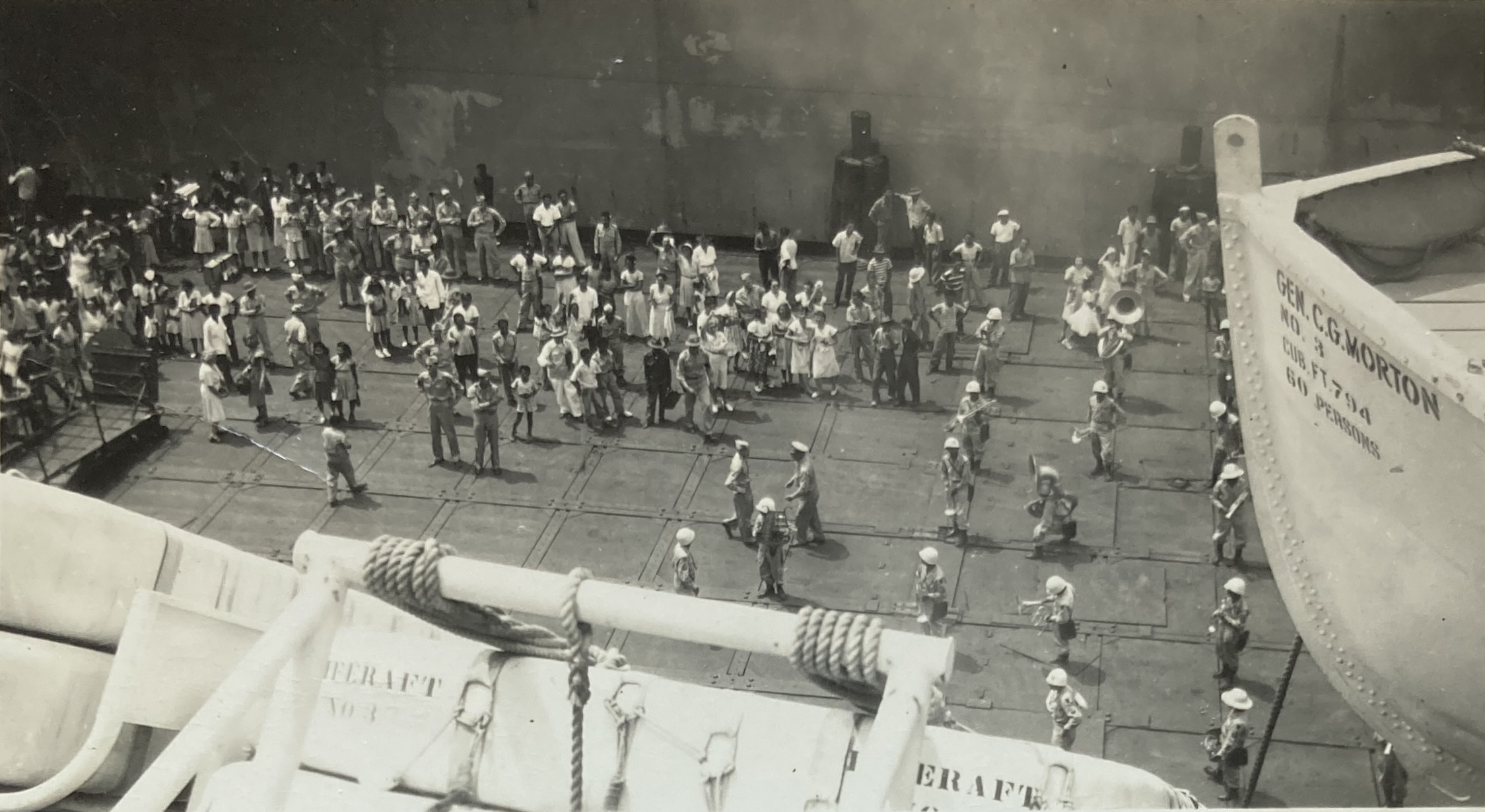
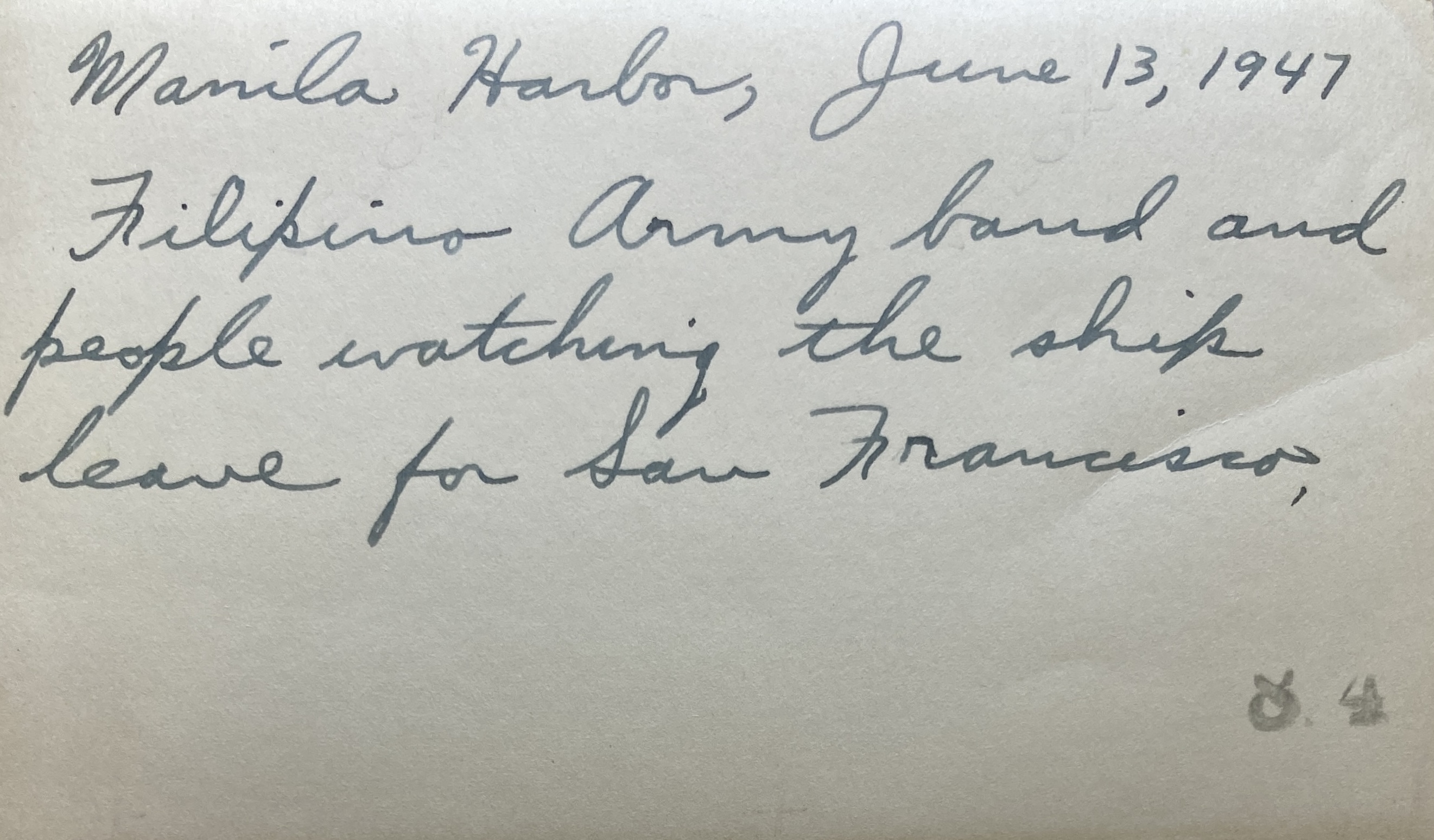
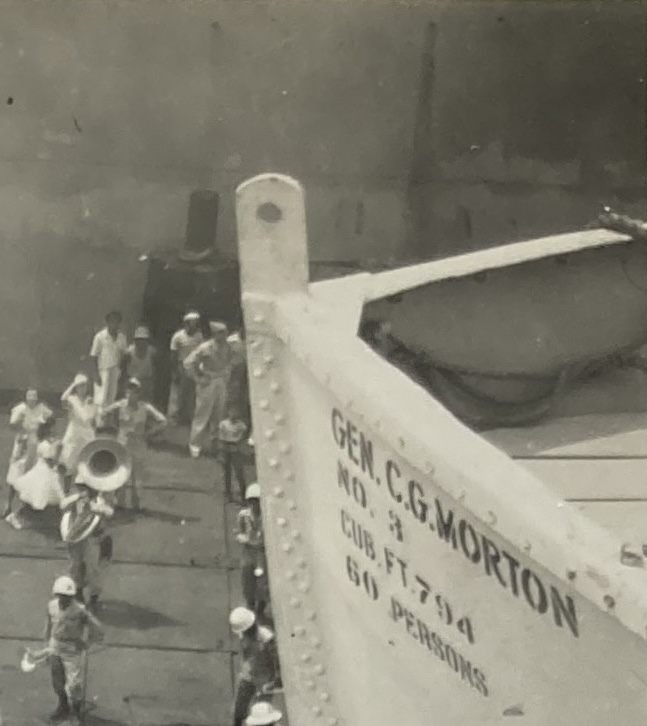
A photograph is laid-in, captioned in ink on the verso: “Manila Harbor, June 13, 1947, Filipino Army band and people watching the ship leave for San Francisco.”
The lifeboat visible at right reveals that the ship was the USAT General C. G. Morton, which entered US Army Transportation Service in 1946 for transporting passengers from the Pacific Theater.
According to the guide, the General C.G. Morton would have been a C-4 transport with capacity for 3,300 passengers. Steam driven with a single screw propeller, the ship measured 622 feet long with a capacity for 17,300 tons and a speed of 18 knots (p. 3).
Because the guide is written with consideration for a mixed group of passengers (military and civilian), it provides a thorough description of the functions and services onboard a military vessel, including hospital, stewards, laundry, a “diet kitchen” for preparation of food for infants, a post exchange (for sundries, pharmacy, etc.), dining facilities, and recreation.
There are also instructions for tipping, which at first appears as a regulation-bound guide to compensation for cabin services, but is also one that reminds civilian passengers that “Service personnel and luxuries are limited and will be proportioned among all passengers. Don’t expect or ask unreasonable attention.”
The most detailed section is that for the debarkation procedures at Fort Mason, which covers all aspects of arrival and the facilities of the base just after the end of World War II, including a brief history of Fort Mason and a highly detailed four-page “Services & Facilities” guide that describes the location and availability of everything from the commissary and the cafeteria to the watch shop and dry-cleaning services.
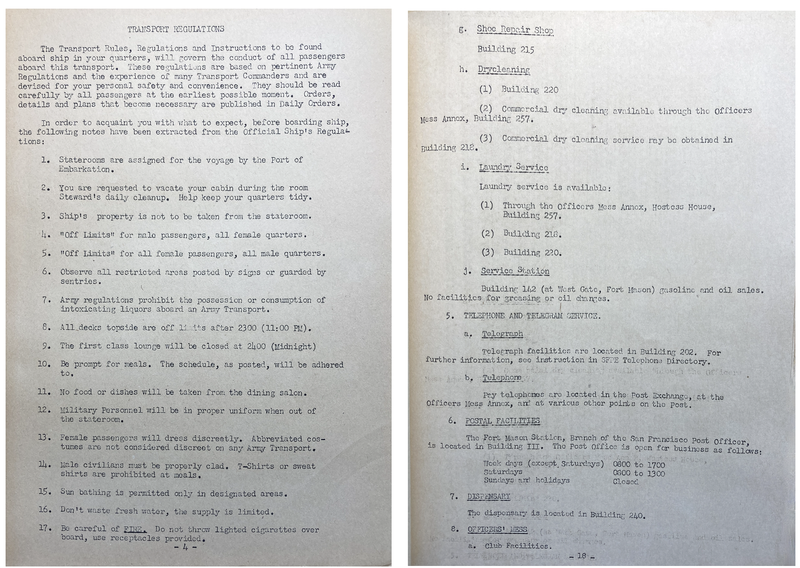
There is a glossary of ships terms "to help you prove that you are not a land lubber,” (p. 10). At the end of the booklet there are five Annex forms, including one for “Public Law 633” for duties, taxes, and customs limits and exemptions for household goods imported to the US, and certificate forms for Transportation of Dependents, Passenger Travel, Shipment of Baggage, and a memorandum for Responsibilities of Military Personnel Traveling Aboard Army Transports (dated June 11, 1947).
Lt. Col. Carl H. Elges, Jr. (1910-1994), Commander of the Army Travel Center in Manila, whose “Bon Voyage” foreword proceeds this guide, was awarded the Legion of Merit “for exceptionally meritorious conduct in the performance of outstanding services to the Government of the United States from August 1962 to August 1965” during the Vietnam War, in which he served as a Colonel.
A valuable and well-preserved booklet documenting post World War II procedures and transport operations.