Bretez's "La Perspective Pratique de l'Architecture"
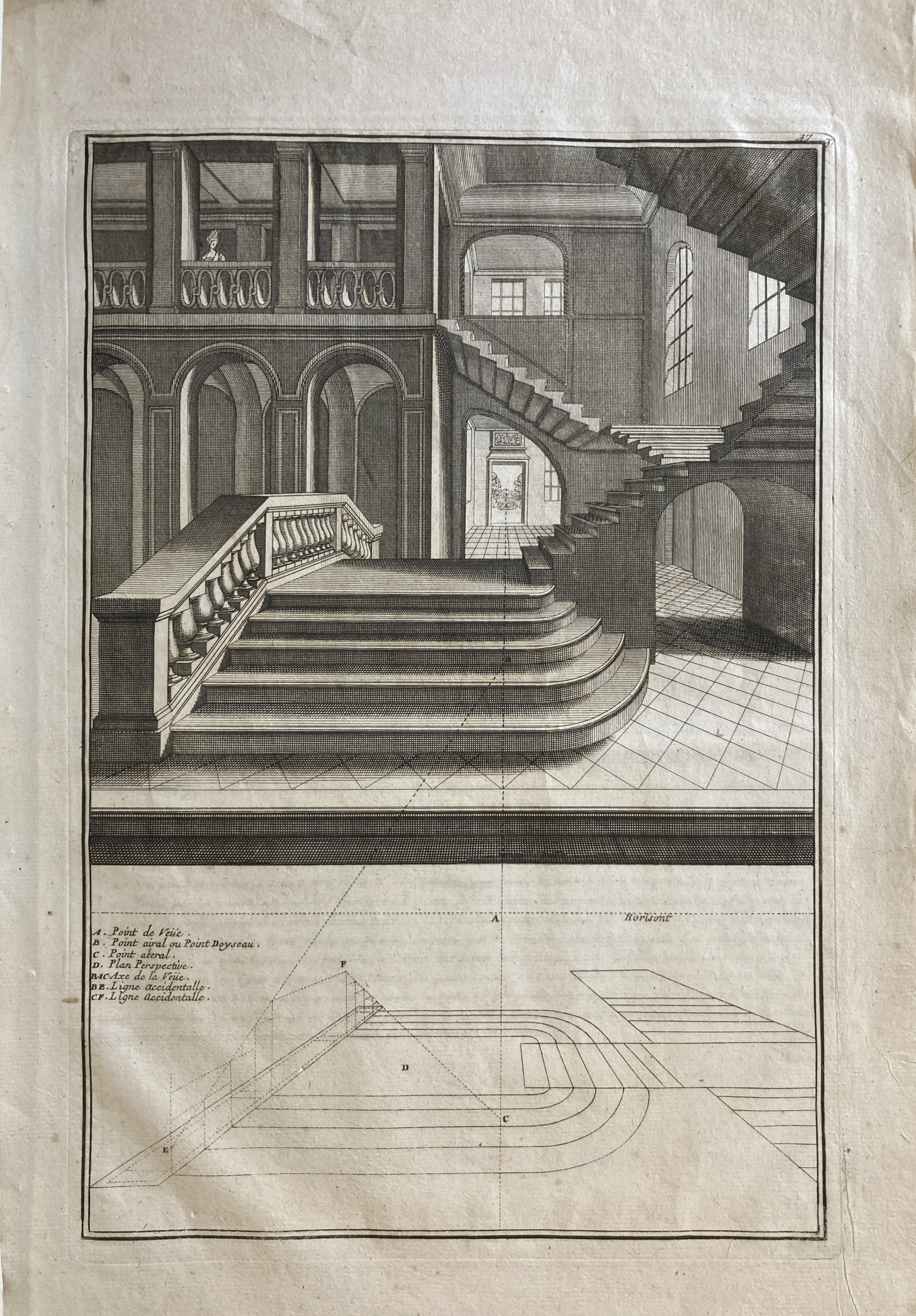
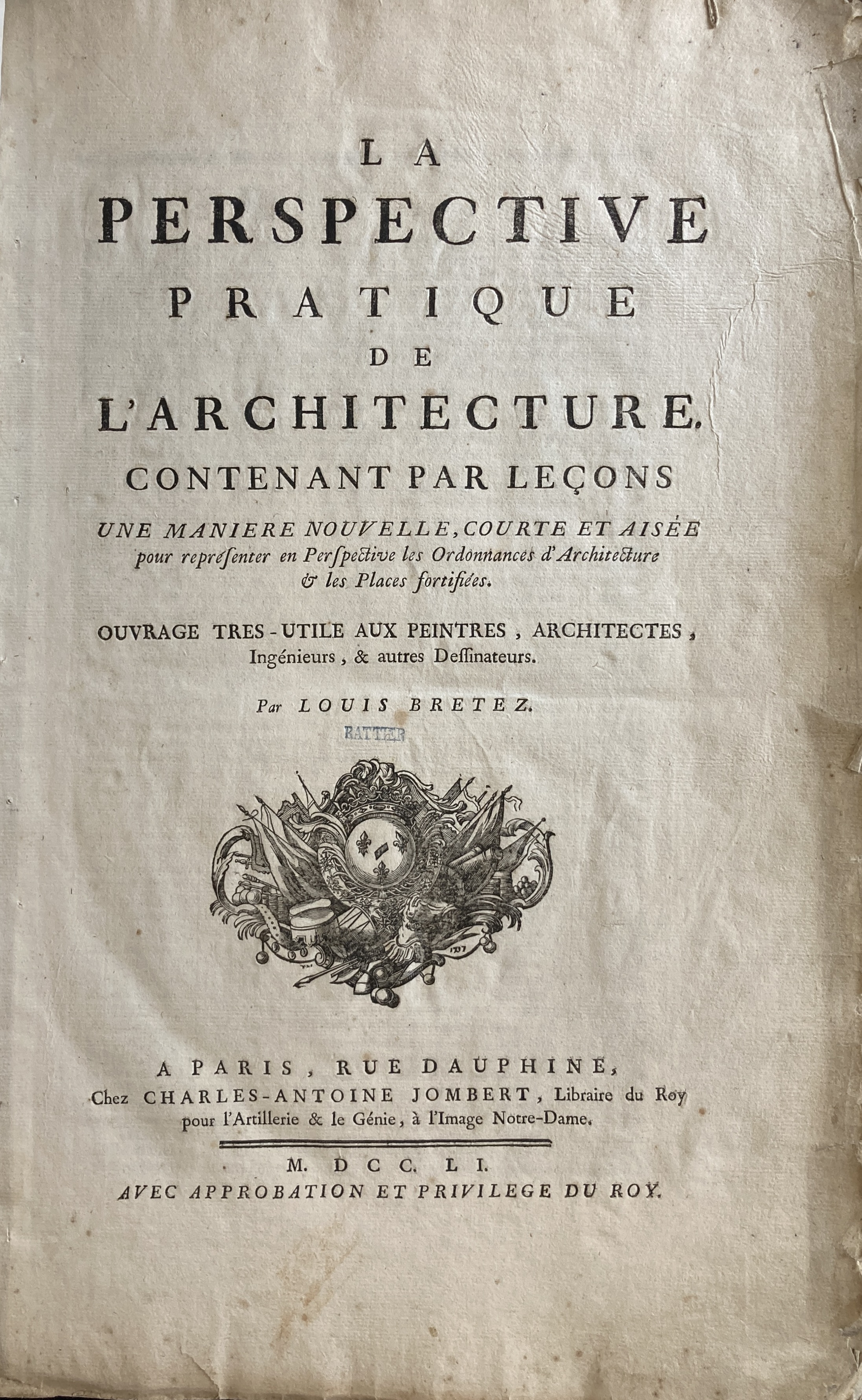
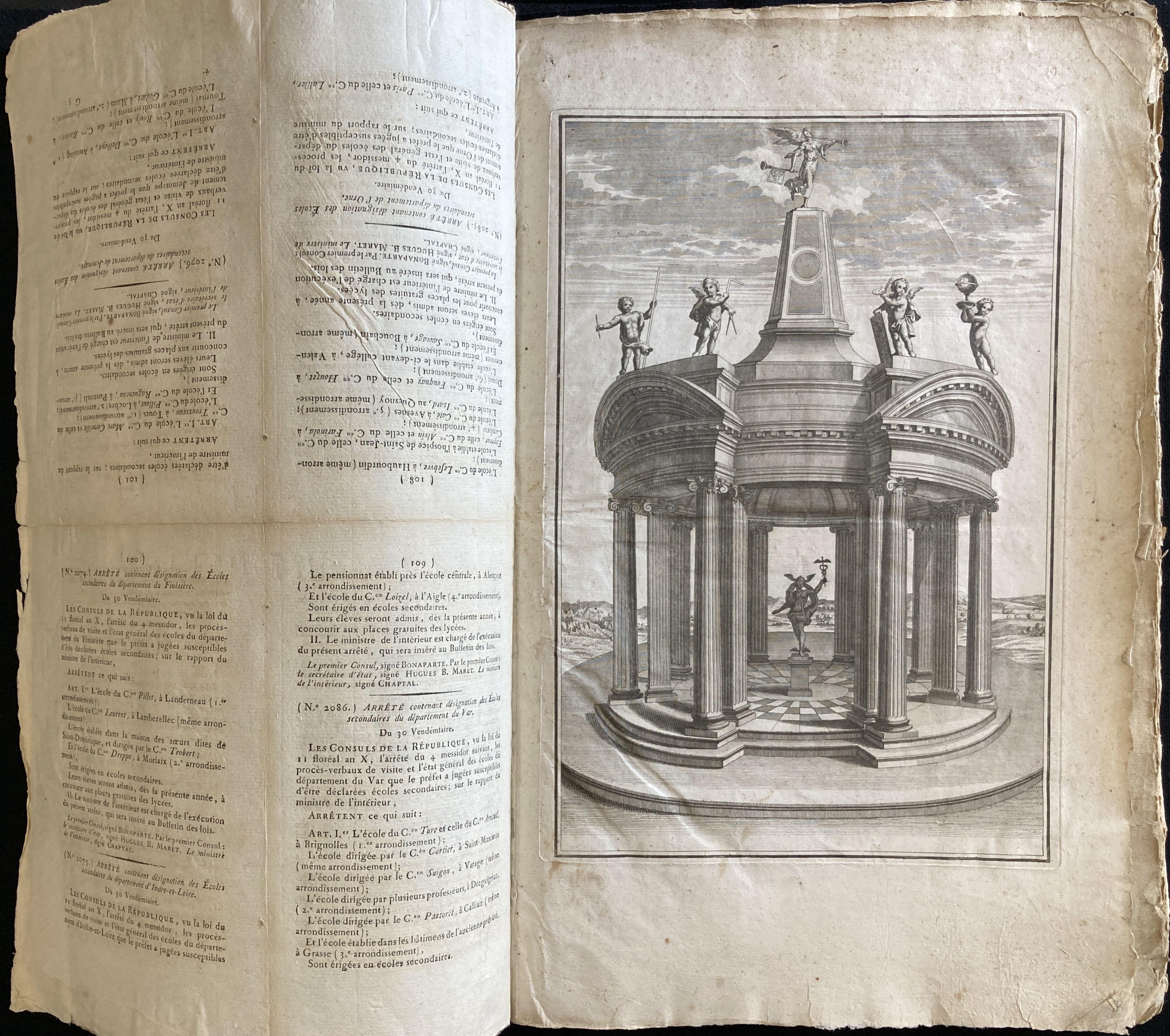
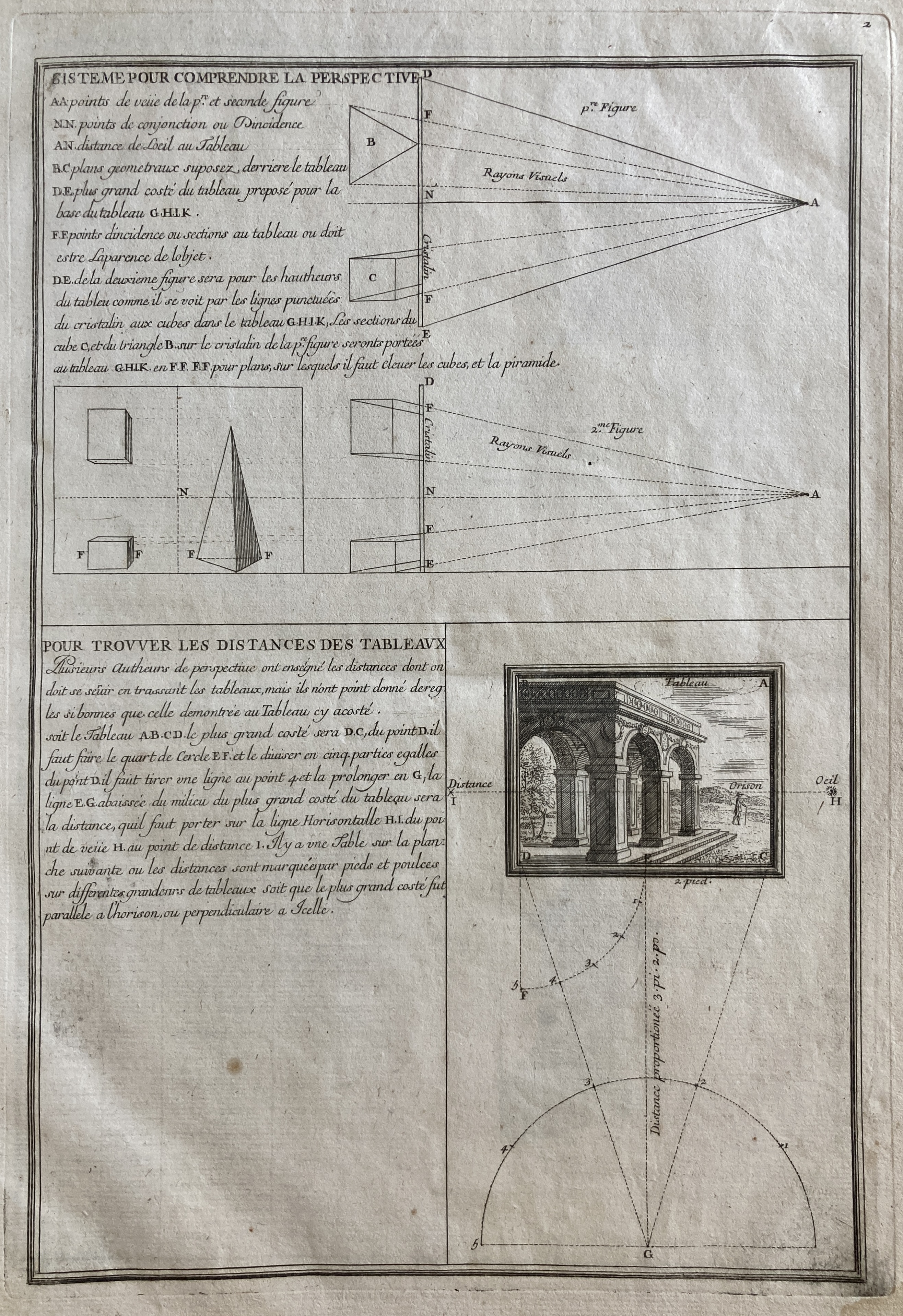
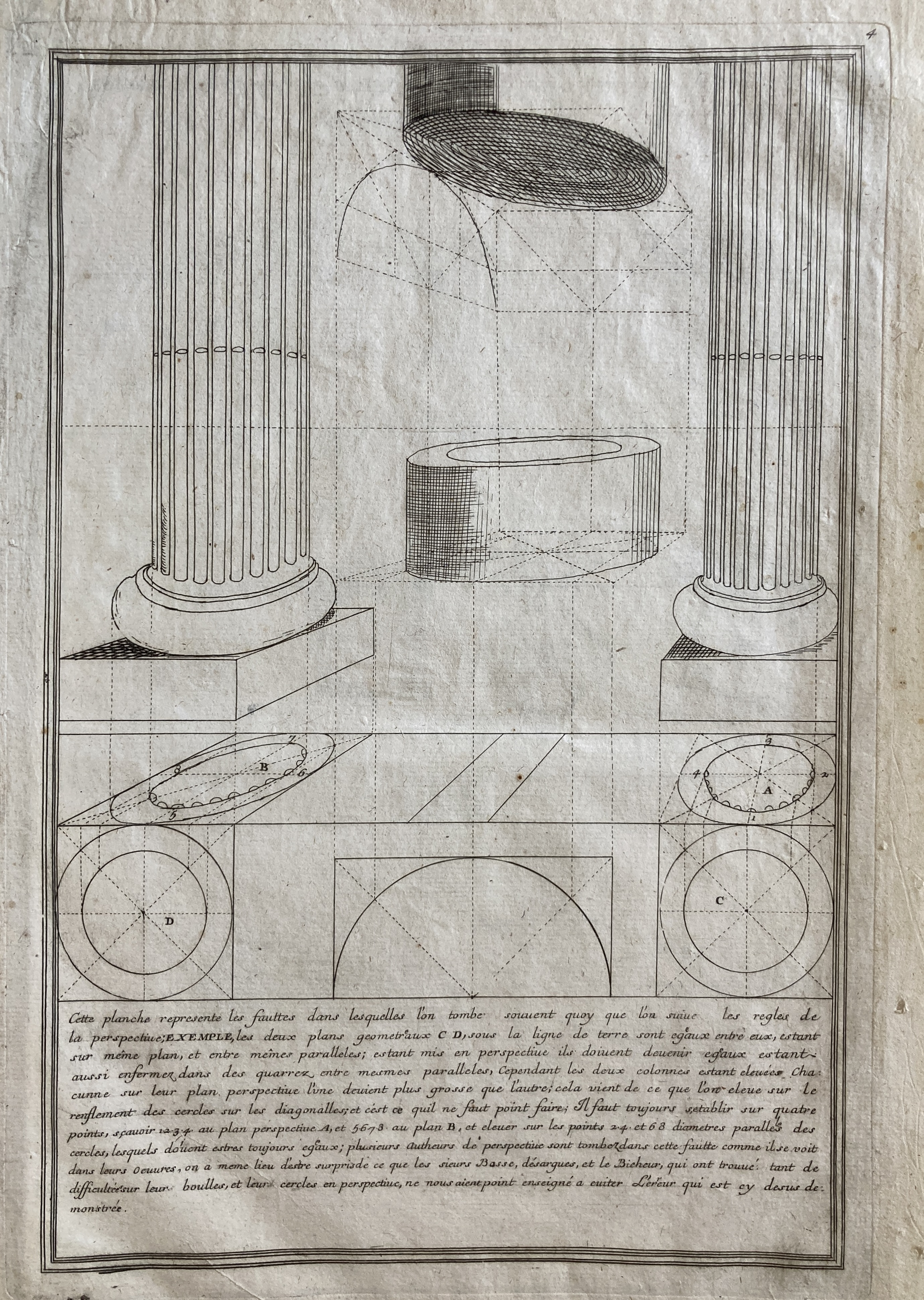
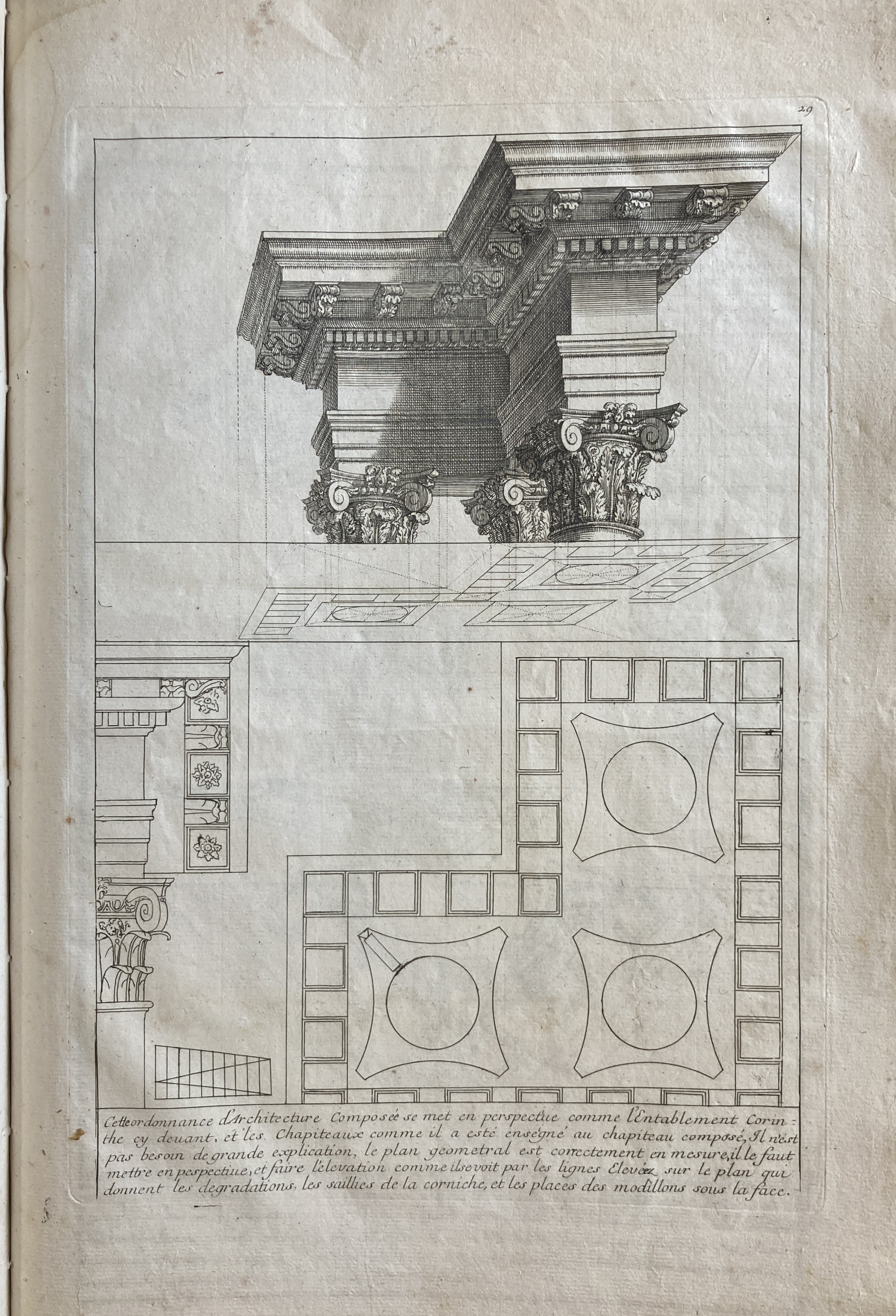
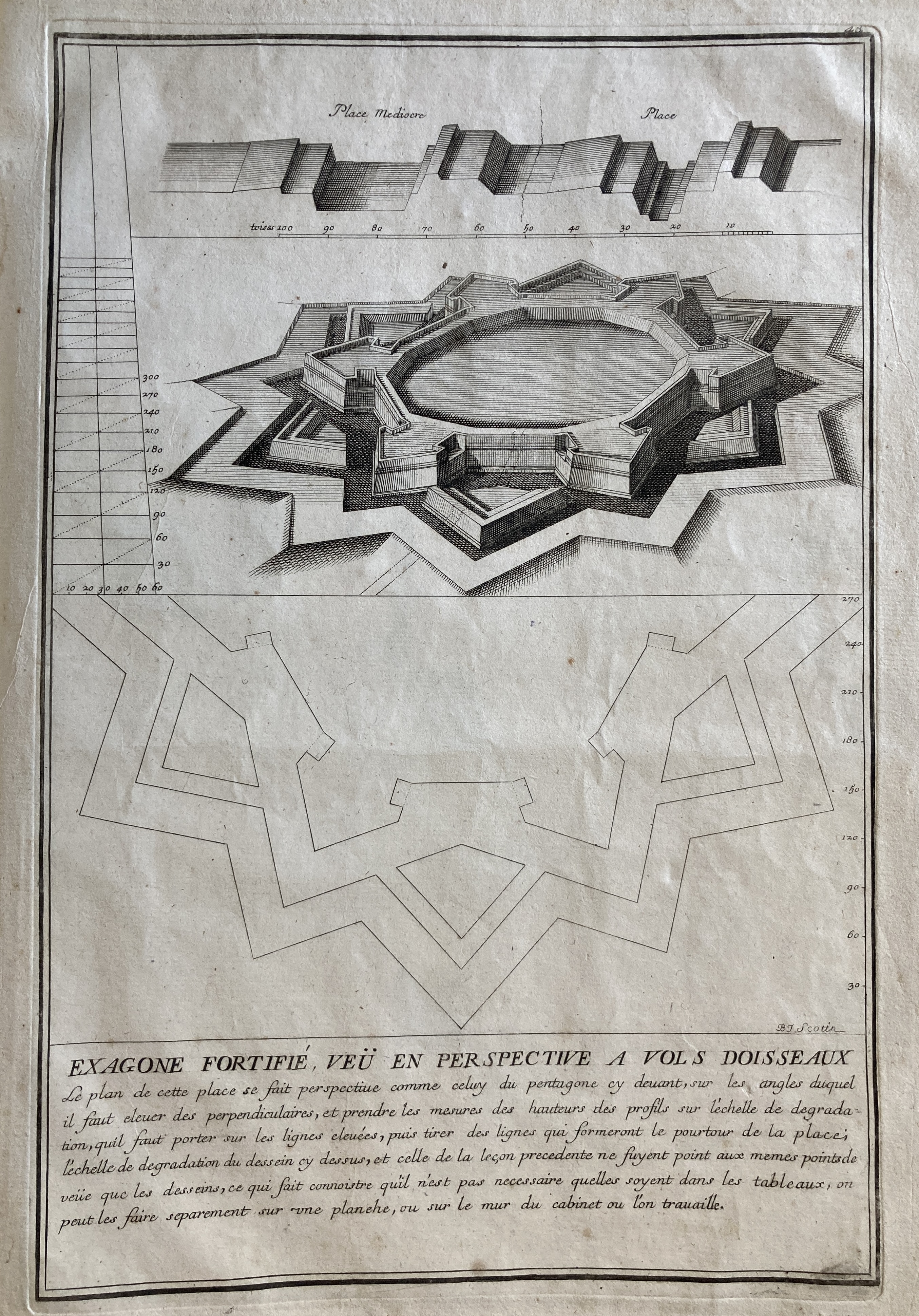
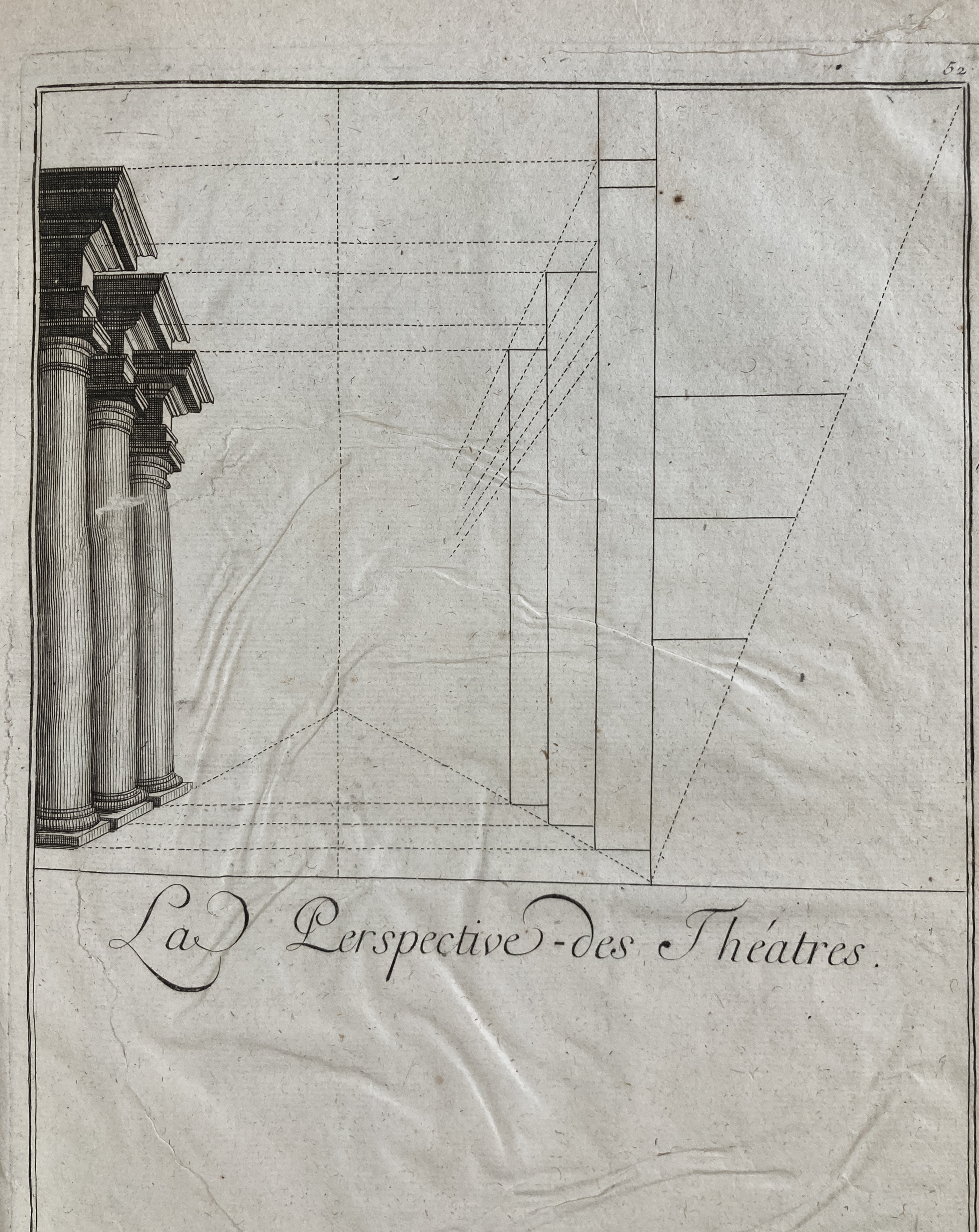
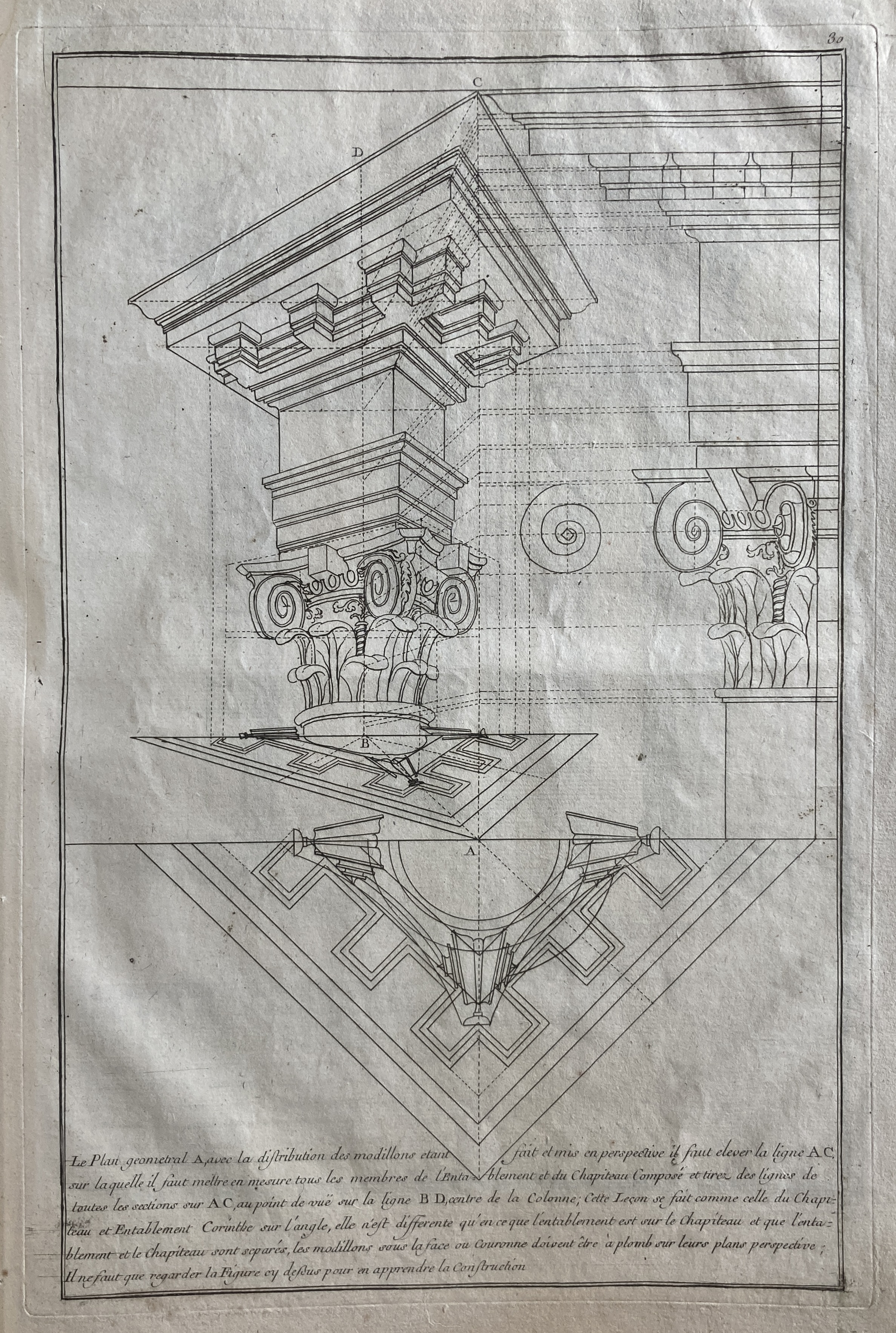
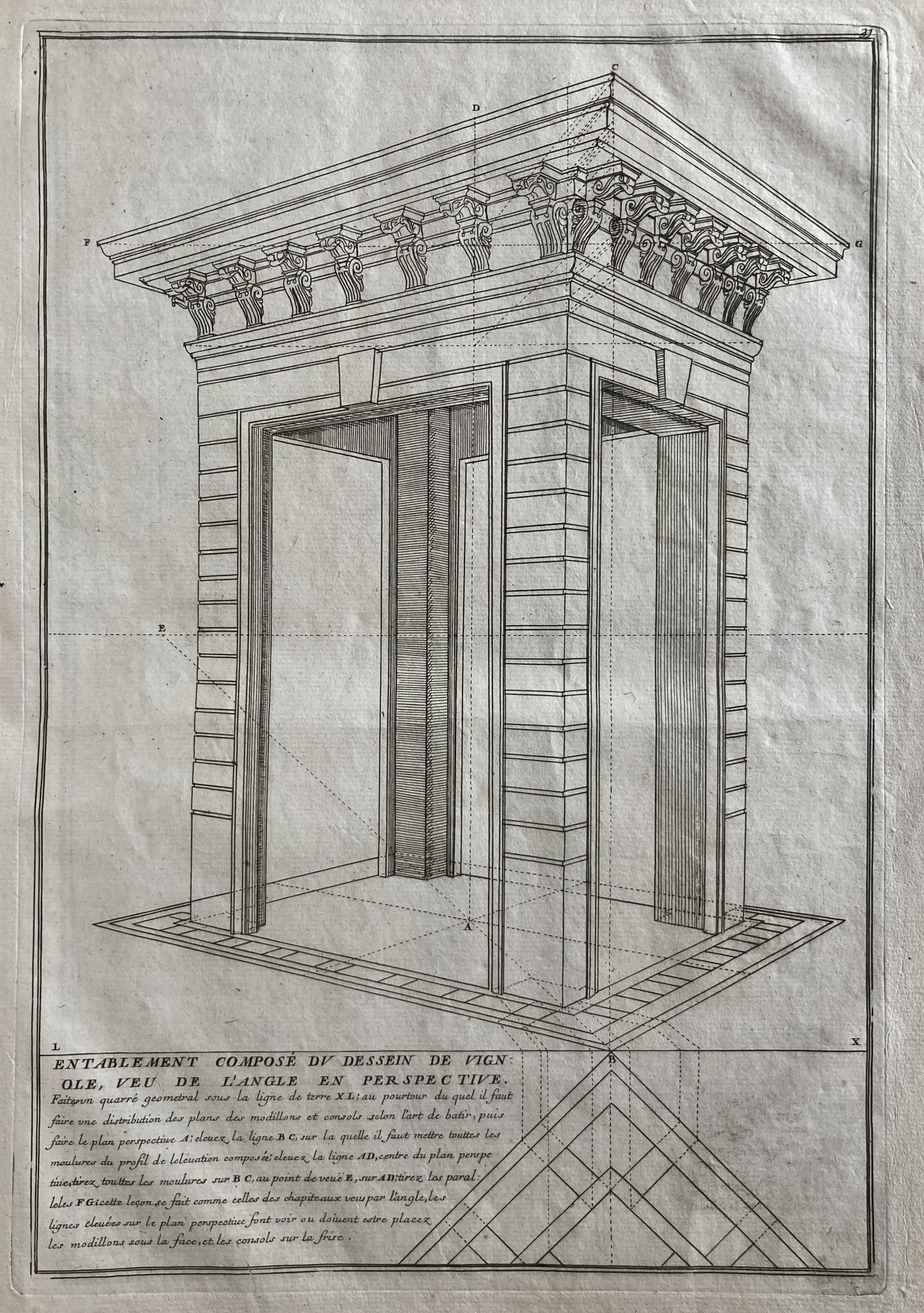
FULL DESCRIPTION: Bretez Perspective 1751
BRETEZ, LOUIS. La Perspective Pratique de l'Architecture. Contenant par leçons une manière nouvelle, courte et aisée pour représenter en perspective les ordonnances d'architecture & les places fortifiées. Ouvrage très utile aux peintres, architects, ingénieurs, & autres dessinateurs.
Paris, Charles-Antoine Jombert, 1751. Second edition.
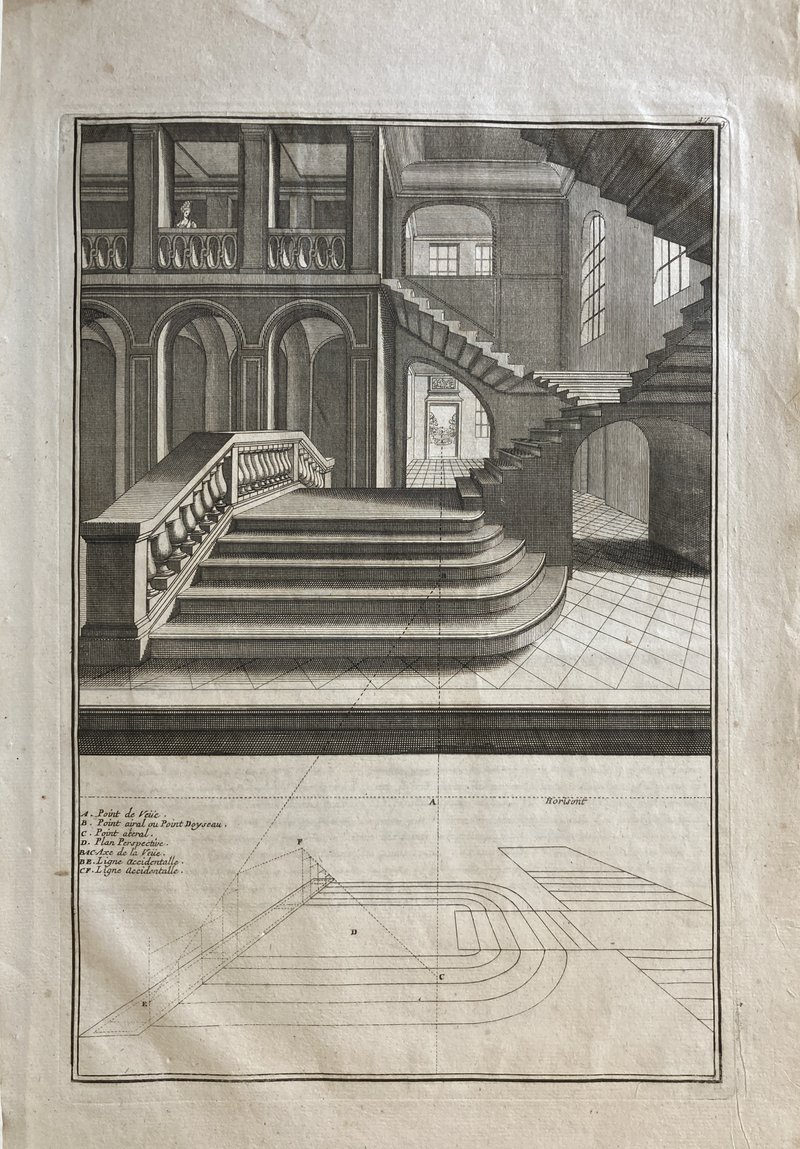
(42.5 x 28 cm). Folio. Frontispiece engraving, title (letterpress), 1 leaf for the preface and privilege, 2 leaves entirely engraved with explications of the plates, and 57 full page plates. (52 plus 5 new plates at the end) Untrimmed. Temporary wrappers post-dating the engravings (produced with waste sheets from 1802). Exlibris stamp 'Rattier' on titlepage and a few times throughout. Some occasional staining at the beginning of the work, edge soiling and wear to some of the leaves, wrinkling to the last few leaves and, as the plates are untrimmed, some frayed edges, covers rubbed, nonetheless a well-preserved copy.
The author of this important work for learning architectural perspective is Louis Bretez, the draughtsman and cartographer commissioned by Michel-Étienne Turgot for the celebrated Plan de Paris (1734-39). The work is a textbook for the practical learning of perspective drawing in architecture and contains lessons taught through the study of the classical orders of architecture and fortifications. The course begins with the principles of geometry, and then gives examples and instruction for drawing columns, arches, vaulted ceilings, staircases, theater perspectives, military perspectives, and fortifications.
The present work was first published by Bretez in 1706, and contained slightly different preliminary matter, including a dedication to the Duc d’Orleans. The preface and the privilege in both editions maintain the same text, but are different settings of type, as is the title page. A comparison of our copy with the 1706 copy at Arsenal (Gallica) and the Getty copy (Hathitrust) suggest that the two editions only differ in these letterpress preliminaries and the five extra engravings included at the end of the 1751 edition. As for the engraved prints themselves, we know that the publisher of our 1751 second edition, Charles-Antoine Jombert, acquired them when he bought “the stock, prints and the bookshop of [Jean-Pierre] Mariette, [which consisted] of works on architecture, painting, ornaments, and drawing” in 1750 (cf. Jombert’s Avis au Publique (1750), in which he announces the acquisition).